Exclusivity stops you working with a brand's competitors for a while. That has a real cost, the deals you'll turn down, so it should never be free and never open-ended. There's no industry-standard rate: here's how to set yours.
Define it first
| Agree | Example |
|---|---|
| Category | Skincare (not 'beauty', which is far wider) |
| Competitors | A named list, or 'brands selling X' |
| Platforms | Instagram and TikTok only |
| Length | 3 months from the posting date, with an end date |
Then price it
Price it per month as a percentage of your content fee, set by what it stops you earning. If you'd normally take one competing deal every couple of months, three months of exclusivity is costing you more than one deal. The free Brand Deal Rate Calculator uses an example 15% a month, which you can change.
Example: a 500 content fee with 3 months' exclusivity at 15% a month adds 225.
Protect yourself
- Narrow categories cost the brand less and you less: offer that before agreeing anything broad.
- Log the category and end date the moment you sign, so a new offer in that category is caught before you say yes.
- If the brand wants to extend it, that's a new fee.
FAQs
Is there a standard rate for exclusivity?
No. Price it per month for a defined category and length, based on the deals it stops you taking.
How long should exclusivity last?
As short as the brand will accept, with a clear end date, and usually tied to when the campaign actually runs.
Plan it in minutes
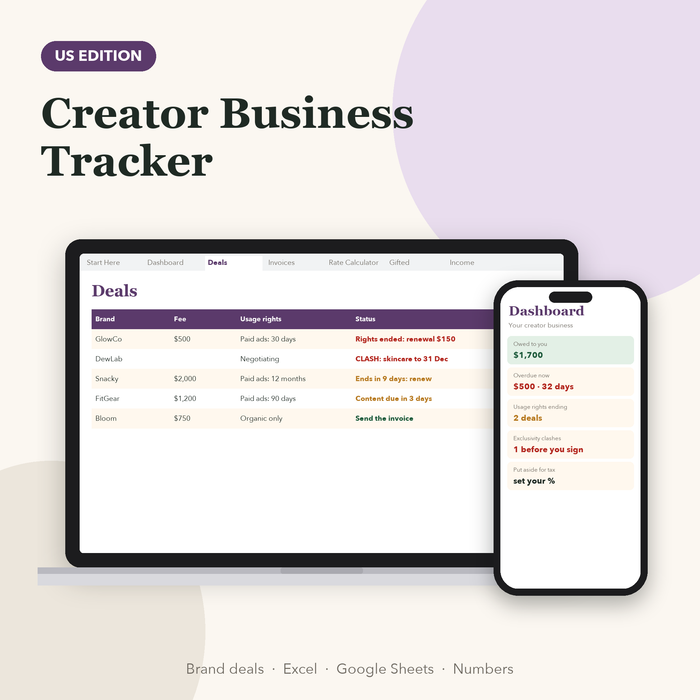
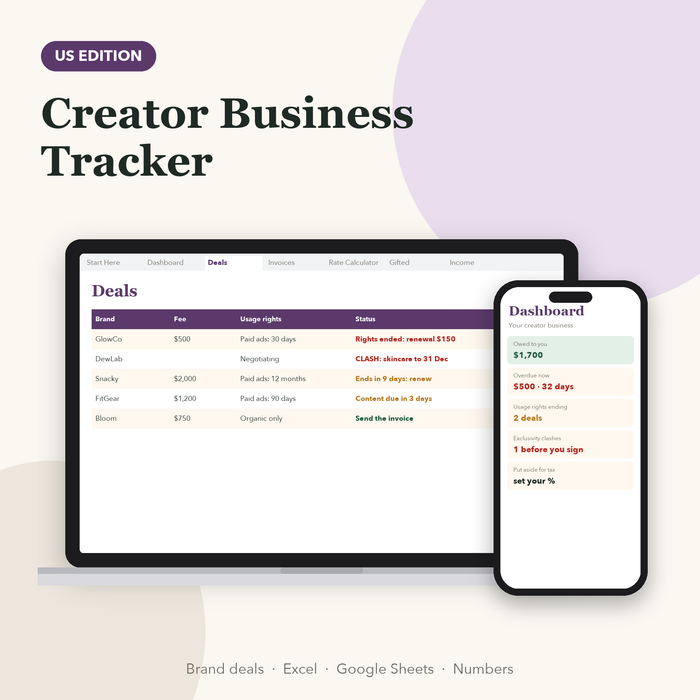
Logs every exclusivity category and end date, and flags a clashing deal before you sign. Editions for the UK, US, Canada and Australia.
See the Creator Business Tracker →