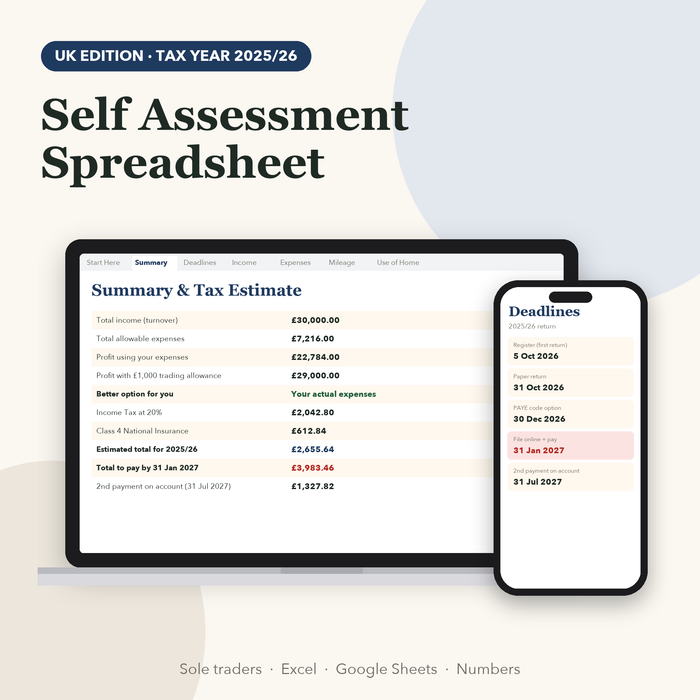
If you were self-employed between 6 April 2025 and 5 April 2026, these are the dates that matter for your 2025/26 tax return.
Key dates
| Date | What's due |
|---|---|
| 5 October 2026 | Register for Self Assessment if this is your first return |
| 31 October 2026 | Paper tax return deadline |
| 30 December 2026 | File online by now if you want tax under £3,000 collected through your PAYE tax code (if eligible) |
| 31 January 2027 | Online return deadline, and pay what you owe plus your first payment on account for 2026/27 |
| 31 July 2027 | Second payment on account for 2026/27 |
What happens if you're late
Miss the 31 January online deadline and HMRC charges a £100 penalty straight away, even if you don't owe any tax, with more penalties the later it gets. Interest is charged on late payments.
Payments on account, explained
If your bill is over £1,000 (and less than 80% of your tax was already taken at source), HMRC usually asks for advance payments towards next year: half on 31 January and half on 31 July, each based on this year's bill. That's why your first January bill as a sole trader can be bigger than expected.
Making Tax Digital
From 6 April 2026, sole traders and landlords with qualifying income over £50,000 must keep digital records in compatible software. That applies to the 2026/27 tax year onwards, not the 2025/26 return described here.
Plan it in minutes
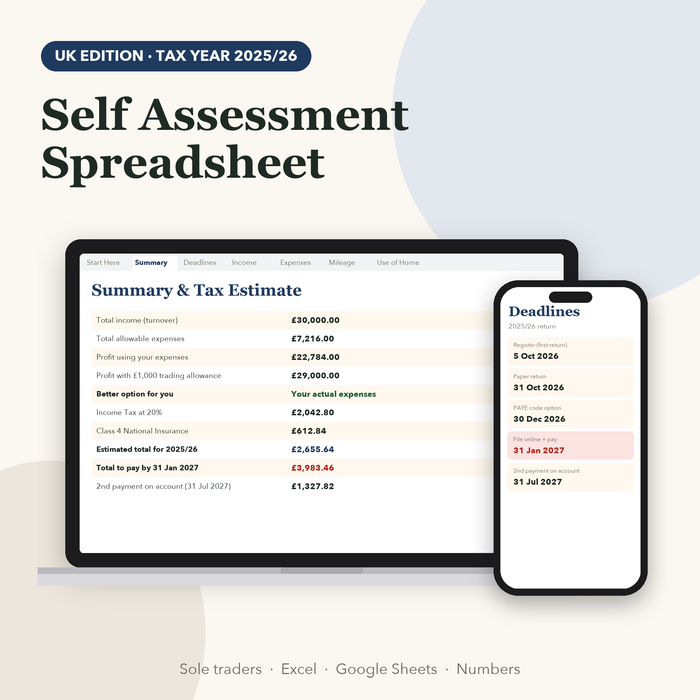
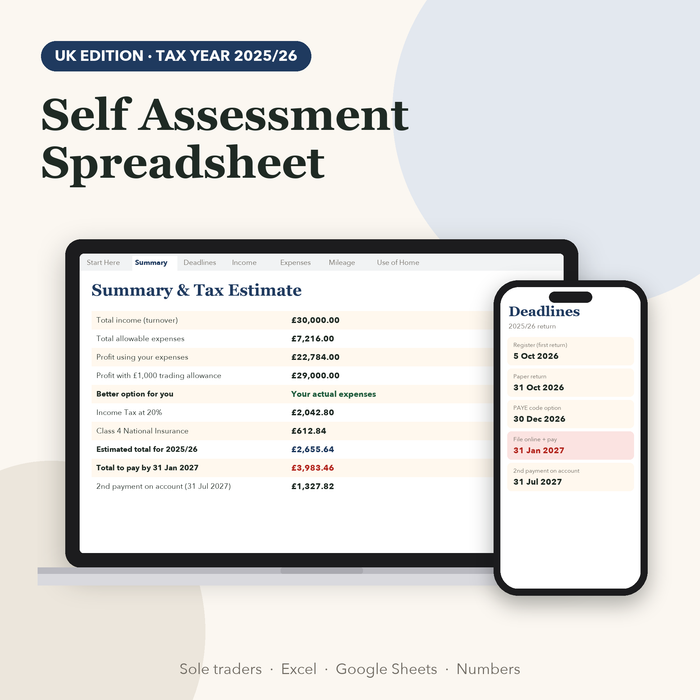
Keep your 2025/26 income and expenses in one place, see your profit, and get a rough Income Tax and National Insurance estimate, including what's due on 31 January and 31 July.
See the Self Assessment Spreadsheet UK →