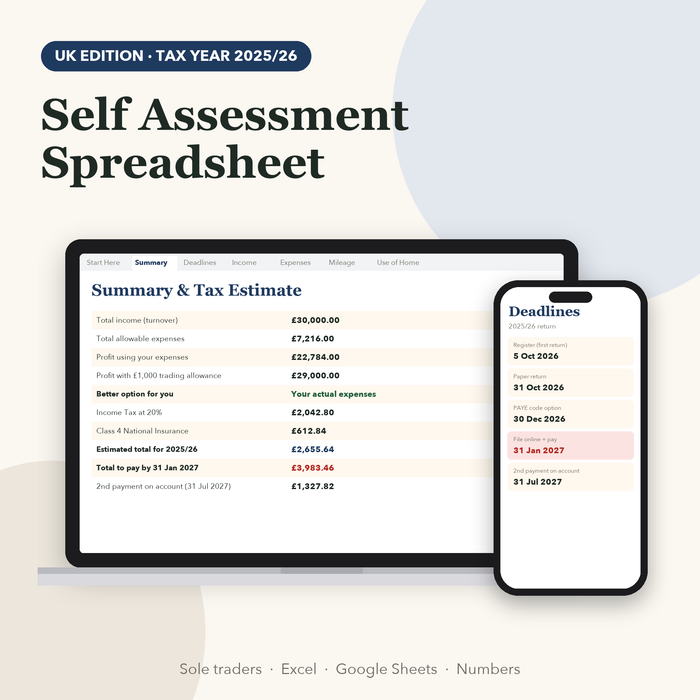
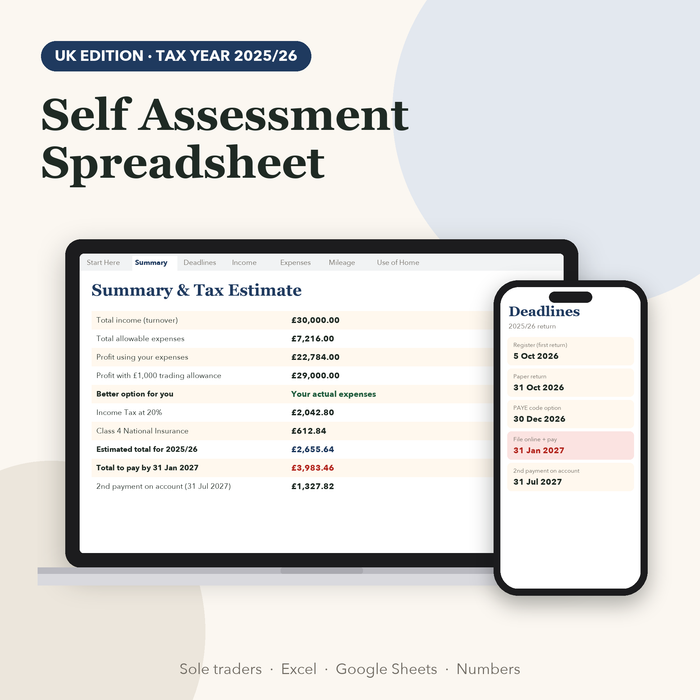
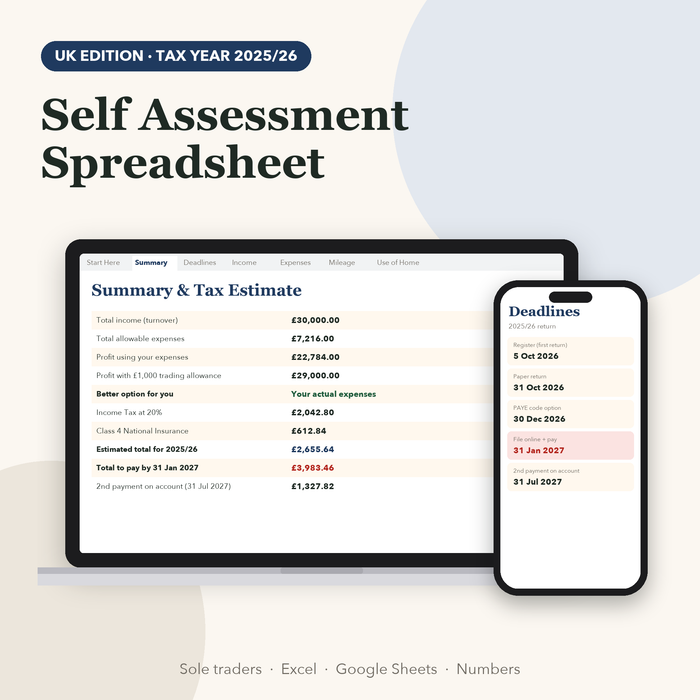
Work it out from your profit, not your turnover. At £30,000 profit, the 2025/26 bill is about £4,530 (15%), and in a first year with payments on account you need about £6,800 (23%) by January.
Tax and National Insurance by profit (2025/26)
| Profit | Income Tax + Class 4 NI | % of profit | Needed by 31 January in your first year |
|---|---|---|---|
| £15,000 | £632 | 4% | £632 (4%) |
| £20,000 | £1,932 | 10% | £2,898 (14%) |
| £30,000 | £4,532 | 15% | £6,798 (23%) |
| £40,000 | £7,132 | 18% | £10,698 (27%) |
| £50,000 | £9,732 | 19% | £14,598 (29%) |
| £60,000 | £13,889 | 23% | £20,833 (35%) |
| £80,000 | £22,289 | 28% | £33,433 (42%) |
| £100,000 | £30,689 | 31% | £46,033 (46%) |
Rates for England, Wales and Northern Ireland: Personal Allowance £12,570, 20% to £50,270, 40% to £125,140, 45% above; Class 4 NI 6% between £12,570 and £50,270 and 2% above. Assumes self-employment is your only income. Scottish rates are different.
The simple habit
- Each time you're paid, move your percentage into a separate savings pot.
- Recalculate every few months as your profit becomes clearer.
- In your first year, save for the payment on account too.
FAQs
What percentage should a sole trader save for tax?
It depends on profit: about 15% at £30,000 and 19% at £50,000 for 2025/26, and more in a first year with payments on account (about 23% at £30,000).
Should I save from turnover or profit?
Profit. Tax is charged on what's left after allowable expenses, so saving a flat % of turnover can be far too much or too little.
Does this include National Insurance?
Yes: the table includes Class 4 National Insurance, which is collected through Self Assessment.
Plan it in minutes
Its tax pot shows your personal set-aside % and the amount to move next to every payment you log, based on your actual income and expenses.
See the Self Assessment Spreadsheet UK →