Payments on account are advance payments towards next year's tax bill. Each one is half of last year's bill, due on 31 January and 31 July.
Why your first January bill is so big
In your first year with a bill over £1,000, January brings this year's whole bill plus half of next year's in advance. That's 150% of the bill in one go.
GOV.UK's worked example
| Amount | |
|---|---|
| Tax bill for the year | £3,000 |
| Already paid in payments on account | £900 + £900 |
| Balancing payment (31 January) | £1,200 |
| First payment on account for next year (31 January) | £1,500 |
| Total due 31 January | £2,700 |
| Second payment on account (31 July) | £1,500 |
When you don't have to make them
- Your tax bill last year was less than £1,000, or
- More than 80% of the tax you owed was already paid outside Self Assessment (for example through PAYE).
Can you reduce them?
Yes, if you expect to earn less: ask HMRC online through your tax account or with form SA303. If you reduce them too far, you'll owe interest on the difference.
FAQs
How are payments on account calculated?
Each is half of last year's Self Assessment bill (including Class 4 National Insurance), due 31 January and 31 July.
Do I have to make payments on account?
Not if last year's bill was under £1,000, or if more than 80% of your tax was paid outside Self Assessment.
Why is my first tax bill so high?
Because January includes the whole of this year's bill plus the first payment on account for next year: 150% of the bill.
Plan it in minutes
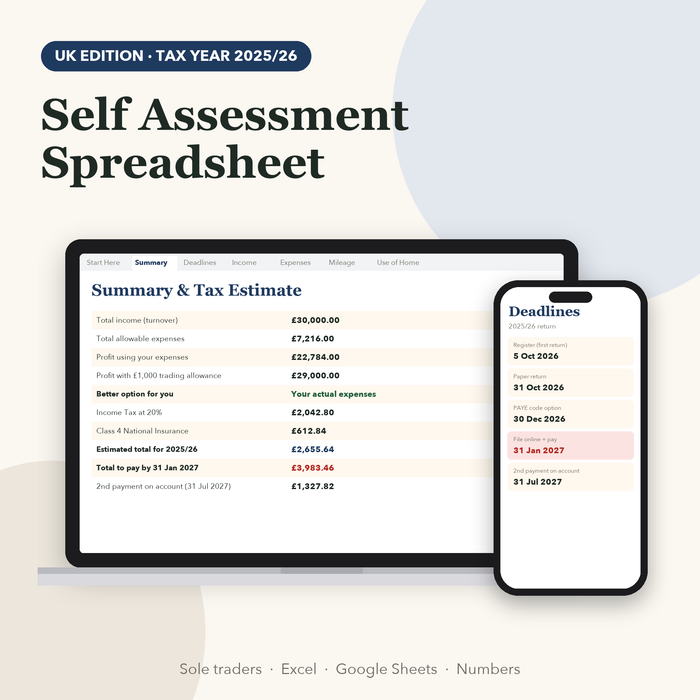
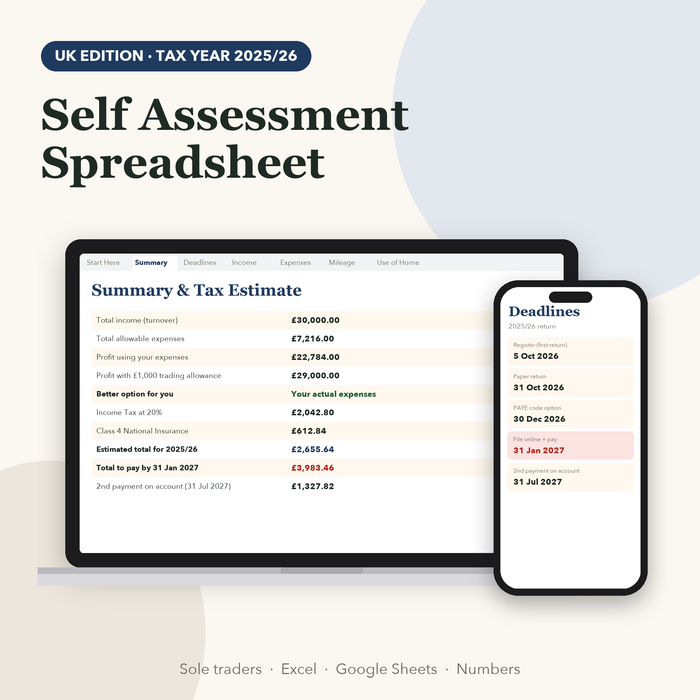
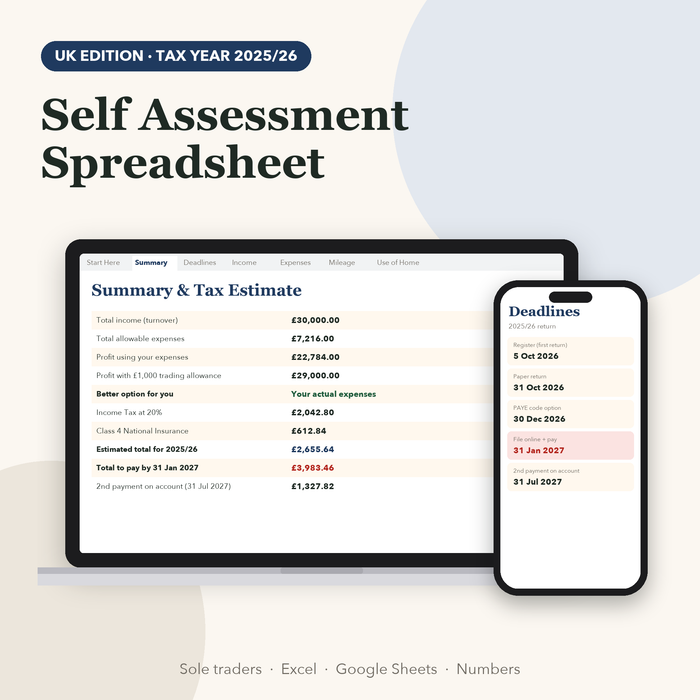
The spreadsheet estimates your bill and shows exactly what's due on 31 January and 31 July, including payments on account, plus how much of each payment to put aside.
See the Self Assessment Spreadsheet UK →