IFTA returns are due on the last day of the month after each quarter, moving to the next business day when that falls on a weekend.
2027 IFTA due dates
| Quarter | Due |
|---|---|
| Oct–Dec 2026 | February 1, 2027 (Jan 31 is a Sunday) |
| Jan–Mar 2027 | April 30, 2027 |
| Apr–Jun 2027 | August 2, 2027 (Jul 31 is a Saturday) |
| Jul–Sep 2027 | November 1, 2027 (Oct 31 is a Sunday) |
| Oct–Dec 2027 | January 31, 2028 |
Check your base jurisdiction's calendar: weekend rules are set by them.
Do you need IFTA?
If you cross state or province lines in a qualified motor vehicle: two axles and over 26,000 lb (11,797 kg), three or more axles, or a combination over 26,000 lb. Most cargo vans and many box trucks don't qualify.
How the return works
- Total your miles (or km) and fuel for the quarter, and work out your fleet mpg: miles ÷ gallons.
- For each jurisdiction, taxable fuel = miles driven there ÷ fleet mpg.
- Take off the tax-paid fuel you bought there.
- Multiply by that quarter's tax rate: positive means you owe, negative is a credit.
Example: 820 miles in Texas and 250 in Oklahoma on 115 gallons (60 bought in Texas, 55 in Oklahoma) is 9.30 mpg, so 88.1 taxable gallons in Texas (28.1 more than you bought there) and 26.9 in Oklahoma (28.1 fewer). Rates change every quarter: always use the current IFTA rate matrix.
Canadian base jurisdictions report in kilometres and litres.
FAQs
When is the IFTA return due?
The last day of the month after the quarter: April 30, July 31, October 31 and January 31, moved to the next business day on weekends.
Who needs to file IFTA?
Carriers running qualified vehicles (over 26,000 lb, 3+ axles, or combinations over 26,000 lb) across state or province lines.
Where do I find IFTA tax rates?
The IFTA tax rate matrix at iftach.org, updated every quarter.
Plan it in minutes
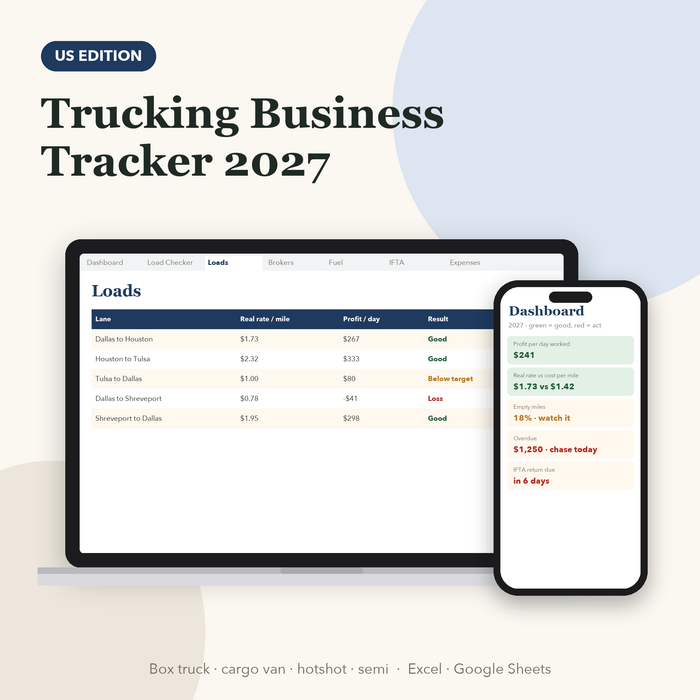
Every load with its real rate per mile, a broker scorecard, IFTA worksheet and a phone-friendly dashboard. US edition · Canada edition.
See the Trucking Business Tracker 2027 →