Most late payments get fixed with the right paperwork and a firm reminder. If not, freight brokers must carry a $75,000 surety bond or trust fund that carriers can claim against.
Step by step
- Day 1 overdue: check your paperwork. Rate confirmation, signed BOL and invoice all sent? Missing paperwork is the most common reason for a hold.
- Days 1–7: send a polite reminder with the load number, amount, due date and the documents attached.
- Days 8–21: second notice and a phone call. Ask for a payment date in writing.
- Day 22+: final notice. Give a date and say you'll claim on the broker's bond and report the non-payment.
- Claim on the bond (BMC-84) or trust (BMC-85). The surety's details are on the broker's FMCSA record.
Stop it happening again
- Invoice the day you deliver, with everything attached.
- Track days to pay for every broker; drop or price up the slow ones.
- If cash flow is the problem, compare quick pay and factoring with the free factoring cost calculator.
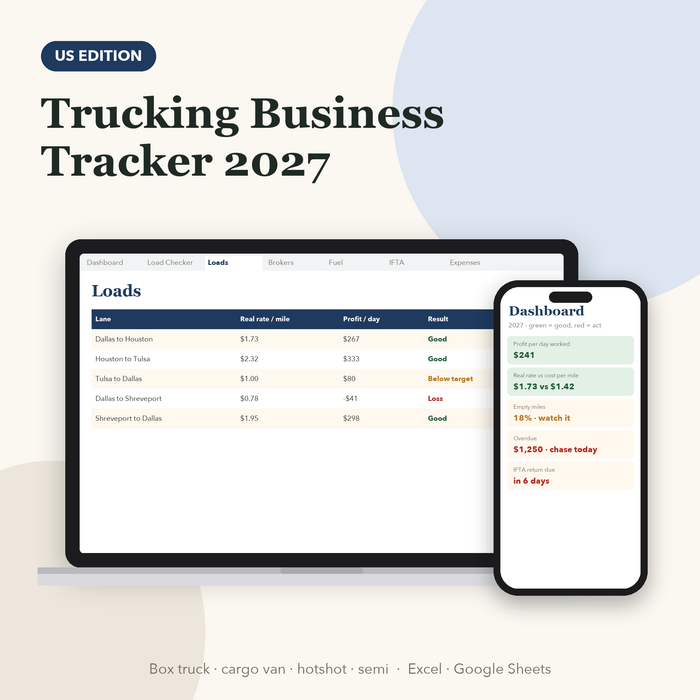
The Trucking Business Tracker flags overdue invoices, tells you which reminder to send and has the three emails written for you.
FAQs
What can I do if a freight broker doesn't pay?
Check your paperwork, send reminders, call, give a final notice, then claim against the broker's $75,000 surety bond or trust fund.
How much is a freight broker bond?
Brokers must carry $75,000 of financial security: a surety bond (BMC-84) or trust fund (BMC-85).
How long do brokers take to pay?
Commonly 30–60 days; quick pay or factoring gets you paid sooner for a fee.
Plan it in minutes
Every load with its real rate per mile, a broker scorecard, IFTA worksheet and a phone-friendly dashboard. US edition · Canada edition.
See the Trucking Business Tracker 2027 →